If like me, when you read Eliyahu M. Goldratt’s ‘It’s Not Luck‘, the sequel to his best-selling and influential business novel The Goal, you were first introduced to his ‘thinking processes’. His set of diagrammatic thinking tools which can be used to solve all kinds of problems, simply by reasoning through cause and effect relationships.
I could tell that the Thinking Processes were a powerful set of tools which would have many applications throughout my business life. However the story/novel format that Goldratt uses in ‘Its Not Luck’, left me with a lot of questions regarding how best to use these tools. I came away from the book excited, but eager for more clarity.
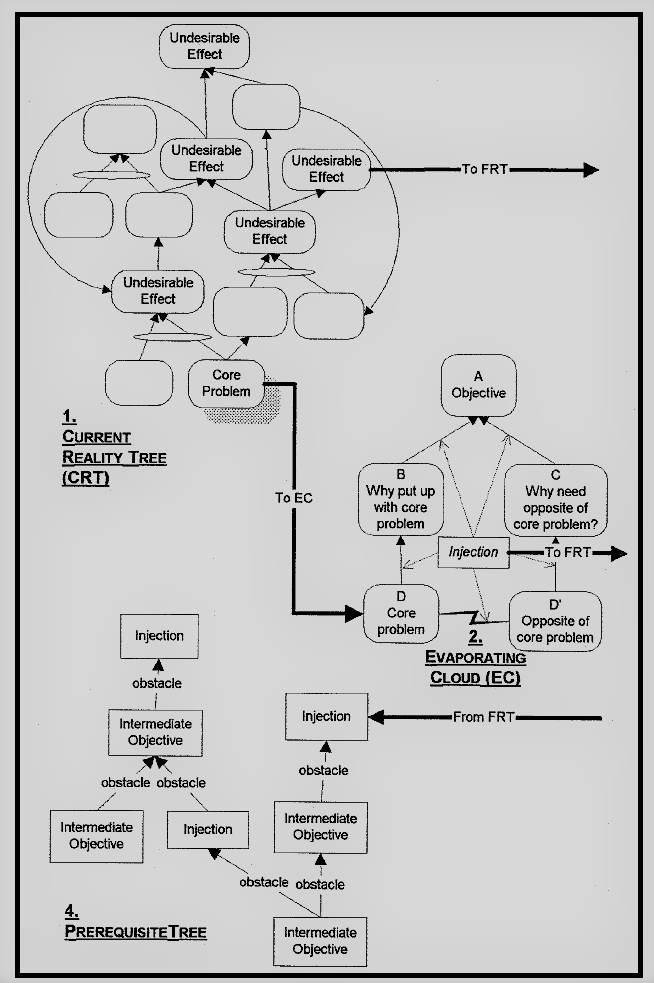
I spent some time searching on Google for additional sources of information on the Thinking Processes and to my surprise there was not a wealth of knowledge easily available. I was not able to easily answer the questions I had.
Step forward the book ‘Thinking for a Change: Putting the TOC Thinking Processes to Use’ by Lisa J. Scheinkopf.
This book, written by a TOC consultant, attempts to give a further explanation of these tools in a much more traditional textbook-style and in doing so it succeeded in giving me the additional clarity that I was seeking. Both in terms of how to use each of the processes on its own, and also how to use them in combination.
The book starts off with the basics, by first explaining how cause and effect relationships should be reasoned through, and how you can seek to clarify these relationships by adding additional causes, effects or links between the two. By doing so, the book is literally giving you the building blocks to begin constructing the ‘tree’ diagrams that form the basis of the thinking processes.
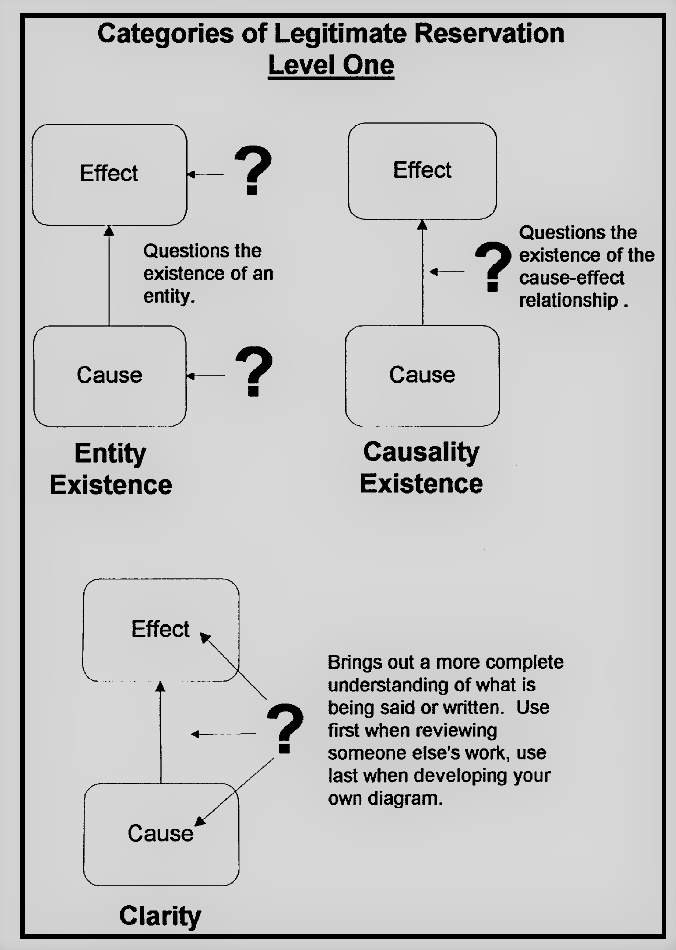
Once the book has given a solid grounding on how this is done, it then goes through each of the Thinking Processes in turn and explains how to construct them, offering up best practice tips from experience of using them in the field.
Once the book has comprehensively explained each tool, with multiple examples for each one, it goes on to explain how the tools would be used in combination to resolve complex multi-stage transformations of a business. Also touching on which tool is best for which kind of problem.
As a supplementary guide to the original “It’s Not Luck’ I thought this book was excellent. The two books in combination give a great insight into how to use these tools, and if you are serious about using the TOC Thought Processes, I would not hesitate to pick up a copy of ‘Thinking for a Change: Putting the TOC Thinking Processes to Use’ by Lisa J. Scheinkopf.
 Jimmy's Corner of the Internet
Leave a comment