How can I maximise the positive impact of a new software deployment? 📈🥷
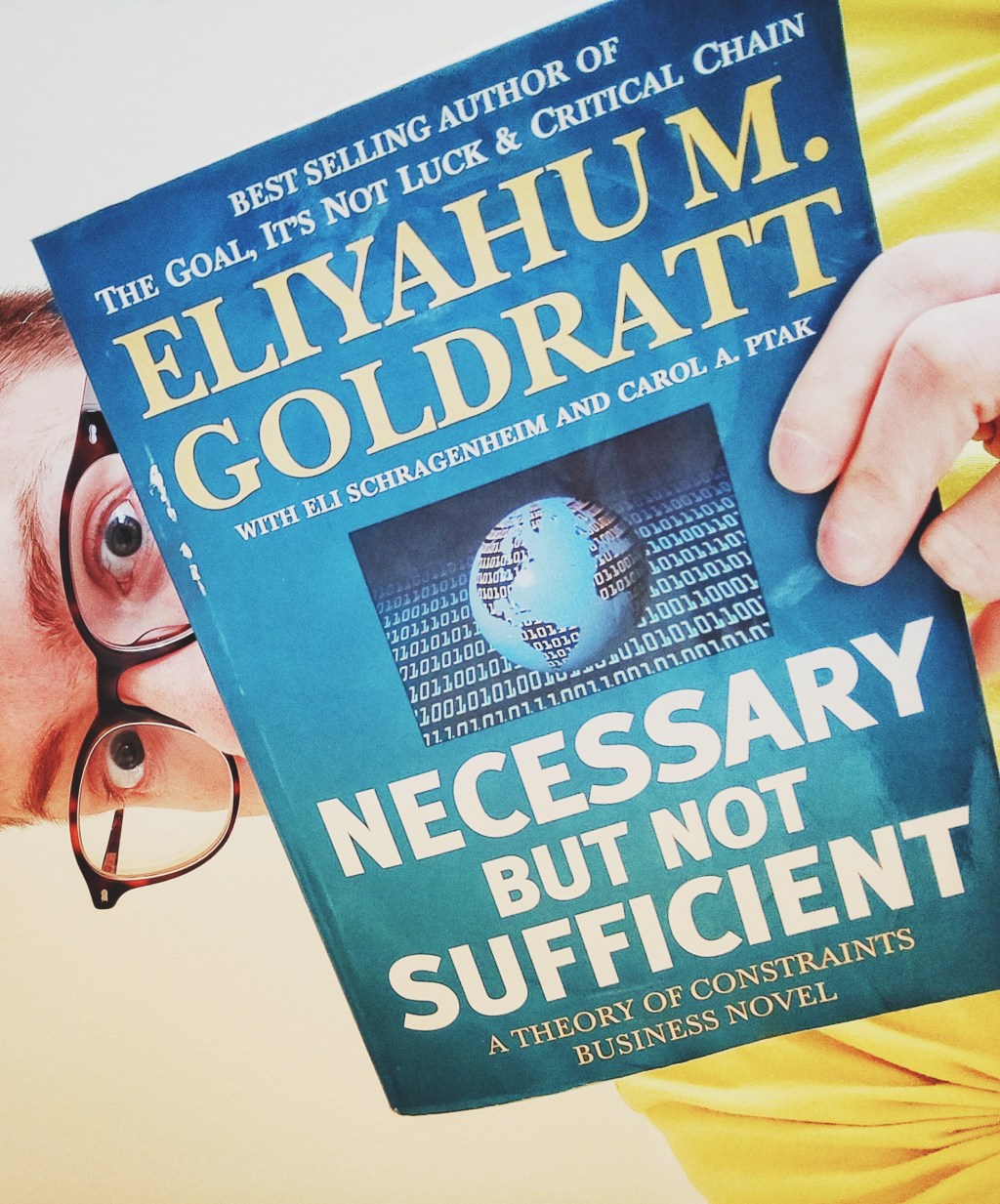
That’s the question I’m trying to find an answer to, as I am currently working on a new finance system for our group of companies at PBH, as well as an ERP system for one of our manufacturing businesses. Being a TOC nerd I was keen to read the Eli Goldratt book ‘Necessary but not sufficient’ all about this very topic. Here is what I took away:
The central hypothesis of the book is that when most companies install new software they don’t actually change their processes in any meaningful way. (Anecdotally this rings true to me as most companies doing software deployments seem to consider having as little change as possible after deployment as a big win)
The book argues companies make the mistake of assuming that by simply having more efficient versions of their existing processes, such as faster reporting, this will translate to better bottom line performance. Goldratt says the value of these efficiency gains is much lower than people realise, and doesn’t really have any impact on the P&L. So the only way to gain the true value of these software applications is to use them to facilitate brand new work processes and by extension change the underlying operation assumptions within the business.
Edit – A reader put to me that companies don’t make process changes because they don’t have the resources to change software and change workflows at the same time. That is fair. But Goldratt’s point is not that they have to be done simultaneously. His point is that the second half (the process changes) should be known ahead of time and planned, not simply left to be figured out later on once the software has been in deployment for a while.
A central theme found throughout all TOC books is the idea that existing operational assumptions and company policies are the real bottleneck in any business, not any physical resource, and by challenging these assumptions with logical reasoning you can find more profitable ways to run the same business. By deploying software without a clear operational change you wish to achieve, you run the risk of just having a shiny new toy that delivers the same end result you had before.
The book also argues that software vendors and their integrators are doing a disservice to their customers by viewing successful deployments purely in terms of technical success rather than whether the customer gains any value from the system. As far as they are concerned they get paid the same regardless of whether the customer use the software effectively or not. Goldratt argues for taking on more collaborative and long term relationships with customers, with this being a way for software vendors to ultimately earn more money by creating more value.
The message in the book has had a powerful impact on me and is something I’m going to think about with all the current and future software deployments I’m involved with.
However I would add that the author’s audio programme ‘Beyond the Goal’ on Audible arguably does a better job at distilling this lesson (along with several other TOC concepts to boot) than found here in this book.
 Jimmy's Corner of the Internet
Leave a comment